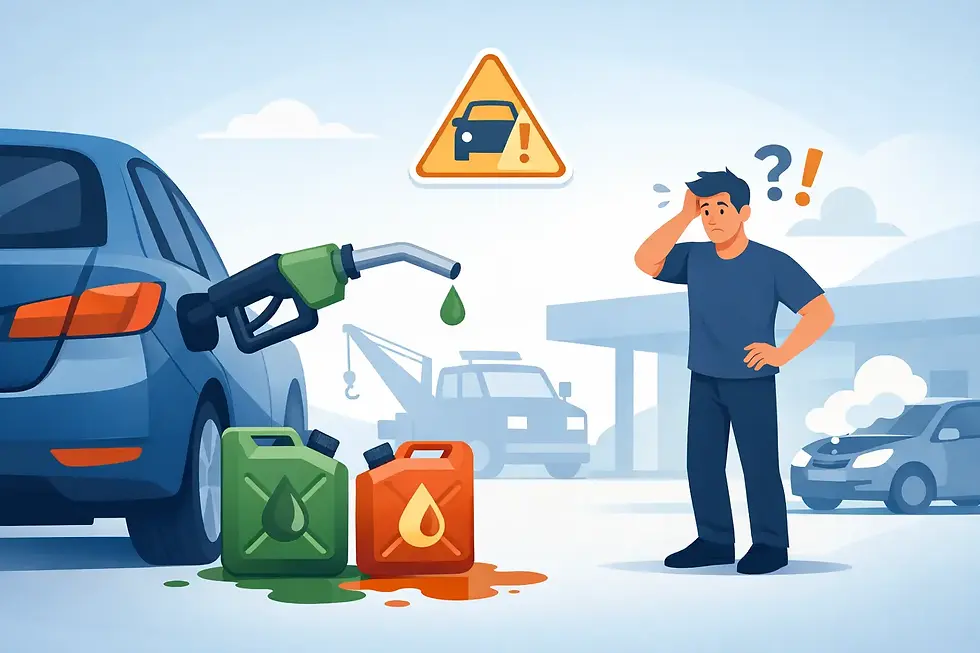
How to Remove Wrong Fuel Safely
- Forecourt Rescue Suffolk
- Jun 24
- 6 min read

That sinking feeling usually hits before you’ve even put the nozzle back. If you’re searching for how to remove wrong fuel safely, the first thing to know is this: stop immediately, do not start the engine, and do not try to “balance it out” with the correct fuel. A fast, calm response now can be the difference between a straightforward drain and a very expensive repair.
Misfuelling is more common than most drivers realise. It happens on school runs, late-night fill-ups, early commutes, and busy workdays when you are running on autopilot. The good news is that in many cases the problem can be dealt with at the roadside or on the forecourt, provided the contamination is handled properly.
How to remove wrong fuel safely without making it worse
The safest approach depends on one key detail: whether the vehicle has been started. If the wrong fuel is sitting in the tank and has not yet been circulated through the fuel system, the job is usually simpler. If the ignition has been turned on or the engine has run, the wrong fuel may have moved into pipes, pumps, injectors, or filters, which raises the risk and changes the clean-up process.
For most drivers, this is not a do-it-yourself job. Modern fuel systems are pressurised, sensitive, and far less forgiving than older vehicles. Petrol in a diesel car can strip lubrication from precision components. Diesel in a petrol car can foul plugs, affect combustion, and cause running issues. AdBlue in the diesel tank is even more serious because it can crystallise and damage the fuel system quickly.
Trying to remove fuel yourself with a siphon hose, improvised pump, or container from the shed is where a bad situation often gets worse. There is a real fire risk, a contamination risk, and a disposal issue. Wrong fuel needs to be removed with the right equipment and handled as controlled waste. That is why the safest option is usually to leave the vehicle where it is and arrange a specialist drain.
What to do the moment you realise
If you have not started the engine, keep it that way. If you have already started it, switch it off as soon as it is safe to do so. Move nothing unless you are in immediate danger. Then take a breath and work through the basics.
Make a note of what went in the vehicle, how much was added, and whether the engine has been started. That information helps a technician decide how extensive the drainage and flushing process needs to be. If you are on a busy forecourt or parked somewhere difficult to find, sending your exact location matters too. A postcode is useful, but What3Words can be even better if you are on a rural road or in a large car park.
At this point, avoid well-meaning fixes. Do not top up with the correct fuel and hope for the best. Do not keep driving to “clear it through”. Do not keep turning the ignition on to move the car unless you have been specifically advised to do so. In some vehicles, even switching on the ignition can prime the fuel system and spread contamination further.
Why professional wrong fuel removal is safer
A proper wrong fuel drain is not just about getting liquid out of the tank. It is about protecting the whole system. A specialist will identify the contamination type, isolate the vehicle safely, drain the fuel using suitable pumping equipment, and assess whether flushing is needed before the engine is restarted.
That matters because not all misfuelling incidents are equal. Petrol in diesel is one of the most urgent because diesel fuel systems rely on lubrication that petrol does not provide. Common rail diesel engines are especially vulnerable and repair costs can climb quickly if the vehicle keeps running. Diesel in petrol is often less catastrophic, but it can still cause misfiring, smoke, non-start issues, and blocked components. AdBlue in a diesel tank is in a different category again and should be treated as a stop-now problem.
Professional removal also deals with the fuel responsibly. Drained fuel cannot simply be tipped away. It must be stored, transported, and disposed of correctly. For a stranded motorist, that is one more reason not to improvise.
Petrol in diesel, diesel in petrol, and other contamination
The phrase “wrong fuel” covers several different problems, and the right response varies.
Petrol in a diesel car is usually the one people fear most, and with good reason. Diesel injection systems use fuel as a lubricant. Petrol reduces that lubrication and can lead to wear in the pump and injectors. If caught before start-up, the fix is often much simpler.
Diesel in a petrol car can still stop you in your tracks, but the damage pattern is different. Petrol engines are not designed to burn diesel properly, so you can see poor running, smoke, and contamination of components. Again, the less the vehicle has been run, the better the outcome tends to be.
AdBlue in the diesel tank is serious because it is not a fuel at all. It can crystallise inside the fuel system and damage expensive parts. The vehicle should not be started, and the system should be dealt with professionally as quickly as possible.
Other cases do happen too, including water in diesel, contaminated forecourt fuel, or screenwash accidentally added to the wrong reservoir. These are all situations where quick assessment can prevent a much larger repair bill.
Can you remove wrong fuel yourself?
Technically, some people try. Safely, it is rarely the right answer.
Older vehicles with simpler tanks and easier access may look straightforward, but appearances can mislead. Modern filler necks often have anti-siphon devices. Fuel lines can be under pressure. Sparks, static, spillage, and fumes all create hazards. Then there is the question of what you do with several litres of contaminated fuel once you have got it out.
There is also a practical issue. If you partly drain the tank but leave enough contamination behind, you may still end up with running faults or hidden damage. A proper service is designed to remove as much risk as possible before the vehicle is put back into use.
For most motorists, especially if the car is relatively new, leased, used for work, or essential for daily travel, the safer choice is a mobile specialist who can come to you and handle it on-site.
What a safe removal visit usually involves
Once a technician arrives, they will normally confirm the vehicle type, the fuel added, the quantity involved, and whether the engine has been started. From there, the process may include draining the tank, clearing contaminated fuel from lines where necessary, changing the fuel filter in some cases, and refilling with the correct fuel before testing.
The exact method depends on the car and the severity of contamination. Some jobs are relatively quick if the mistake was caught immediately. Others need a more thorough system clean. That is why honest assessment matters. Saying “I only turned the key for a second” may feel minor, but it can change what needs to be done.
A mobile service is often the most convenient option because the vehicle can be treated where it stopped. That saves the delay and cost of organising recovery to a garage and can get you moving again much sooner.
How to reduce the chance of lasting damage
If you want the short version, stop early and get help quickly. Most expensive misfuelling repairs happen because the vehicle was driven after the mistake, not just because the wrong nozzle was used.
Time matters, but so does accuracy. Telling the technician exactly what happened helps them bring the right equipment and plan the correct remediation. If you are stranded on a forecourt, roadside, or at home in Suffolk, a rapid response service such as Forecourt Rescue Suffolk can usually deal with the issue where the vehicle stands, which keeps disruption and risk to a minimum.
It also helps to think beyond the engine. If the vehicle is blocking pumps, parked awkwardly, or carrying children, pets, or work equipment, mention that when you call. A good response is not just technical. It is practical and built around getting you safe first.
How to remove wrong fuel safely in future starts with prevention
Even careful drivers make this mistake, especially when switching between petrol and diesel vehicles. Prevention is simple but never perfect. A brief pause before filling, checking the pump label twice, and avoiding distractions can help. Fleet drivers and households with mixed vehicles are at higher risk because habits carry over from one vehicle to the next.
If you do make the mistake again, what matters is not panicking. Misfuelling feels dramatic, but many cases are resolved without long-term damage when dealt with properly. The key is to stop, avoid turning the key, and let someone with the right equipment take over.
A wrong fuel incident is stressful because it happens in a hurry and the consequences can be expensive. The reassuring part is that you do not need to solve it alone. The safest move is often the simplest one: leave the vehicle off, share your location clearly, and get the right help on the way.