
Mobile Mechanic Wrong Fuel Removal Explained

You realise what you’ve done just after replacing the nozzle. Petrol in a diesel. Diesel in a petrol. Maybe AdBlue where it should never have gone. That is exactly when mobile mechanic wrong fuel removal matters most - not later, not after a hopeful restart, and not once the vehicle has been towed elsewhere at extra cost.
The first thing to know is simple. If you have put the wrong fuel or fluid into your vehicle, stop immediately and do not start the engine. If the engine is already running, switch it off as soon as it is safe to do so. A quick decision at that moment can be the difference between a straightforward drain and a much more expensive repair.
What mobile mechanic wrong fuel removal actually means
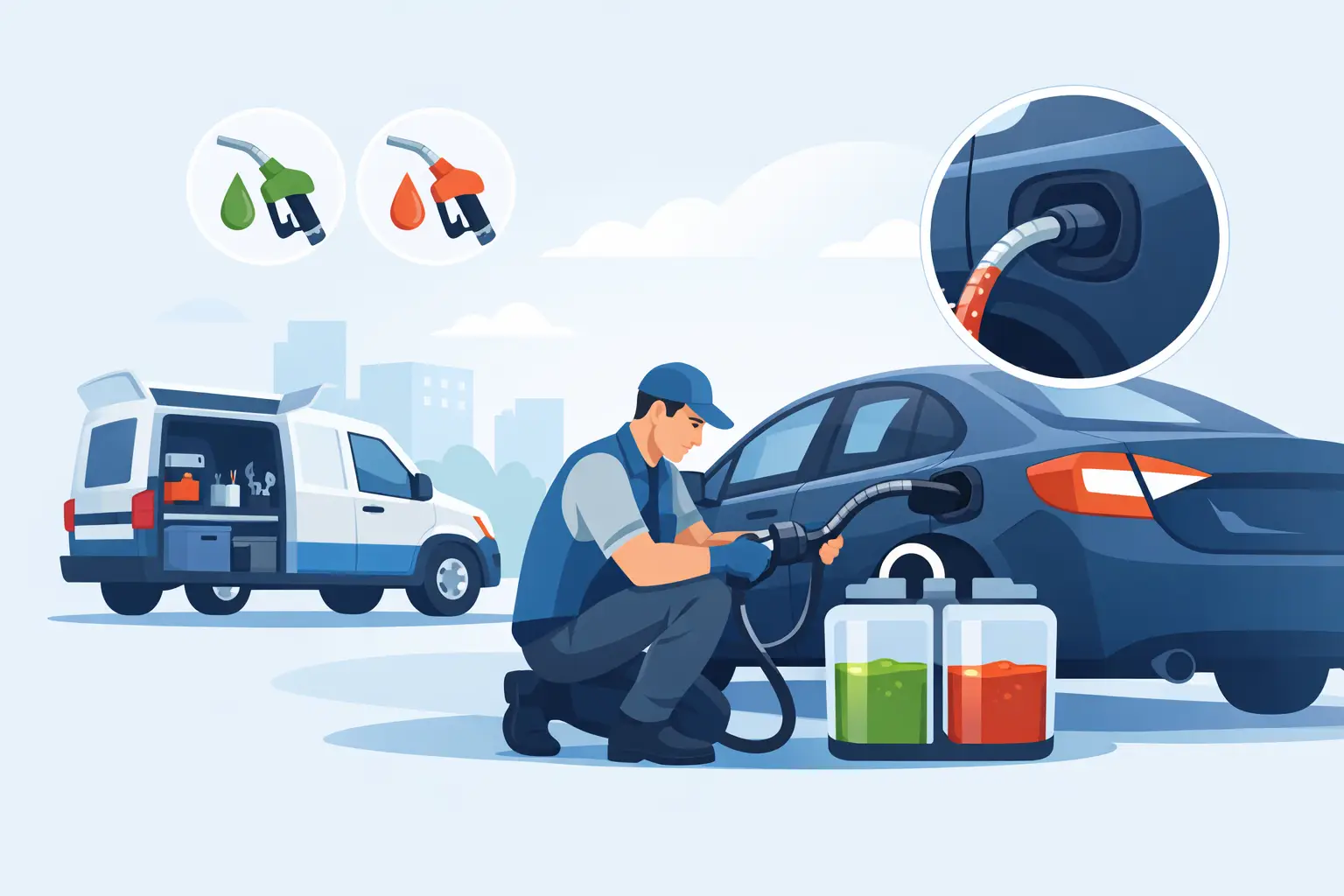
A mobile wrong fuel removal service is an on-site response for misfuelled vehicles. Instead of arranging recovery to a garage, a specialist technician comes to your location, drains the contaminated fuel safely, flushes the system where needed, and gets the vehicle back into a condition where it can be refuelled correctly.
That location might be a forecourt, a lay-by, a workplace car park, your driveway, or the roadside. For most drivers, the biggest benefit is obvious. You do not need to organise towing, wait for a workshop slot, or explain the same problem to three different companies while standing at a petrol station feeling dreadful.
A proper mobile service is also about damage prevention. Modern fuel systems are not forgiving, especially diesel engines with high-pressure common rail systems. The wrong fuel can reduce lubrication, contaminate injectors, affect pumps, and in some cases lead to very costly component failure if the vehicle is driven.
Why a specialist matters more than a general callout
Not every mechanic deals with misfuelling incidents every day. A specialist wrong fuel technician usually arrives with the right pumping equipment, storage containers, contamination control procedures, and experience across different types of incidents.
That matters because not all cases are equal. Petrol in a diesel car is one of the most common problems, but diesel in a petrol vehicle creates different risks. AdBlue in a diesel tank is more serious again, because it can crystallise and cause major damage to the fuel system. Water contamination and other fluid mix-ups also need a different approach.
A general mobile mechanic might be very capable in other areas, but wrong fuel removal is best handled by someone who deals with it routinely and knows when a simple drain is enough and when extra flushing or inspection is needed.
What happens during a wrong fuel removal callout
The process is usually quicker and more controlled than people expect. Once you call, you will normally be asked where you are, what vehicle you have, what went into the tank, roughly how much was added, and whether the engine has been started or driven.
If you are unsure of your exact location, a What3Words reference can help speed up dispatch, especially if you are on a rural road, in a large car park, or somewhere without a clear postcode.
When the technician arrives, they assess the situation first. Then the contaminated fuel is removed from the tank using specialist extraction equipment. Depending on the vehicle and what happened after the misfuelling, they may also need to prime or flush parts of the system before fresh fuel is added.
If the mistake was caught before the engine was started, the job is often simpler. If the wrong fuel has circulated through the system, there may be more work to do. That does not automatically mean severe damage, but it does mean the response needs to be more careful.
Petrol in diesel, diesel in petrol, and AdBlue mistakes
Petrol in a diesel vehicle is usually treated as urgent because diesel fuel systems rely on lubrication. Petrol reduces that lubricating quality, and if the engine is run, the fuel pump and injectors can suffer.
Diesel in a petrol vehicle is often less destructive in the short term, but it still causes serious running problems and should not be ignored. It can foul plugs, affect combustion, and leave the vehicle unable to run properly.
AdBlue in a diesel tank is the one that tends to worry technicians most. AdBlue is not a fuel additive, and it should never enter the diesel tank. Once inside, it can contaminate the entire fuel system and cause significant damage if the vehicle is started or driven. This is one situation where immediate professional action is particularly important.
Can you fix it yourself?
In most cases, no. At least, not safely or properly.
People sometimes think they can siphon the tank, top it up with the correct fuel, and hope for the best. That approach can create more problems than it solves. Modern vehicles often have anti-siphon devices, complex fuel systems, and access issues that make home fixes unrealistic. There is also the issue of safely handling and storing contaminated fuel.
Even when online advice makes it sound simple, the real question is not whether some fuel can be removed. It is whether enough has been removed, whether contamination has reached beyond the tank, and whether the vehicle is genuinely safe to restart. If the answer is uncertain, guessing is expensive.
How quickly should you call?
Immediately.
That is not sales talk. It is practical advice. The sooner the vehicle is assessed, the less chance there is of someone accidentally starting it, moving it, or making the contamination worse. Fast response is particularly useful if you are blocking a pump, stranded on the roadside, or need the vehicle back in service the same day.
For drivers who rely on their car or van for school runs, commuting, deliveries, or appointments, avoiding downtime matters almost as much as avoiding damage. On-site wrong fuel removal is designed for exactly that problem.
The local advantage of a mobile response
If you are stuck in Suffolk, a local specialist can usually reach you faster than a company dispatching from further away. That can make a real difference when you are on a forecourt under pressure to move, or on a country road trying to explain where you are.
Local coverage also means better familiarity with the area, quicker route planning, and fewer delays caused by vague location details. For an emergency callout service, that practical advantage counts.
Forecourt Rescue Suffolk focuses on this type of response, which is why the service is built around fast dispatch, specialist equipment, and resolving the issue where the vehicle is rather than sending you elsewhere.
What to do while you wait for help
Keep things calm and keep the vehicle off. Do not turn the ignition on to check if it still works. Do not attempt to "drive it home". If you are at a petrol station and can safely push the vehicle away from the pump without starting it, do that if staff ask you to move. Otherwise, let them know help is on the way.
Have the key details ready when you call. Your exact location, vehicle registration, fuel type, and what happened will help speed things up. If you have a What3Words location, keep that handy too.
If you are travelling with children, pets, or vulnerable passengers, mention that as well. Practical details like these can help the response feel more manageable when the situation is stressful.
Is mobile mechanic wrong fuel removal always enough?
Often, yes, but it depends on what happened.
If the wrong fuel was added and the engine was not started, the outcome is usually more straightforward. If the engine ran for some distance, further checks may be sensible after drainage and flushing, especially on modern diesel systems. A good technician will explain that clearly rather than making blanket promises.
That honesty matters. Drivers do not need drama, and they do not need false reassurance either. They need a calm assessment, the right on-site work, and a clear view of whether anything else is advisable before the vehicle returns to normal use.
Misfuelling feels like a major disaster in the moment, but it does not always become one. The result often comes down to two things - stopping quickly and getting specialist help to the vehicle without delay.
If you ever make that mistake, treat it as a technical problem, not a reason to panic. Leave the engine off, give your location clearly, and let the right person come to you. That one decision can save a great deal of time, money, and avoidable damage.


