
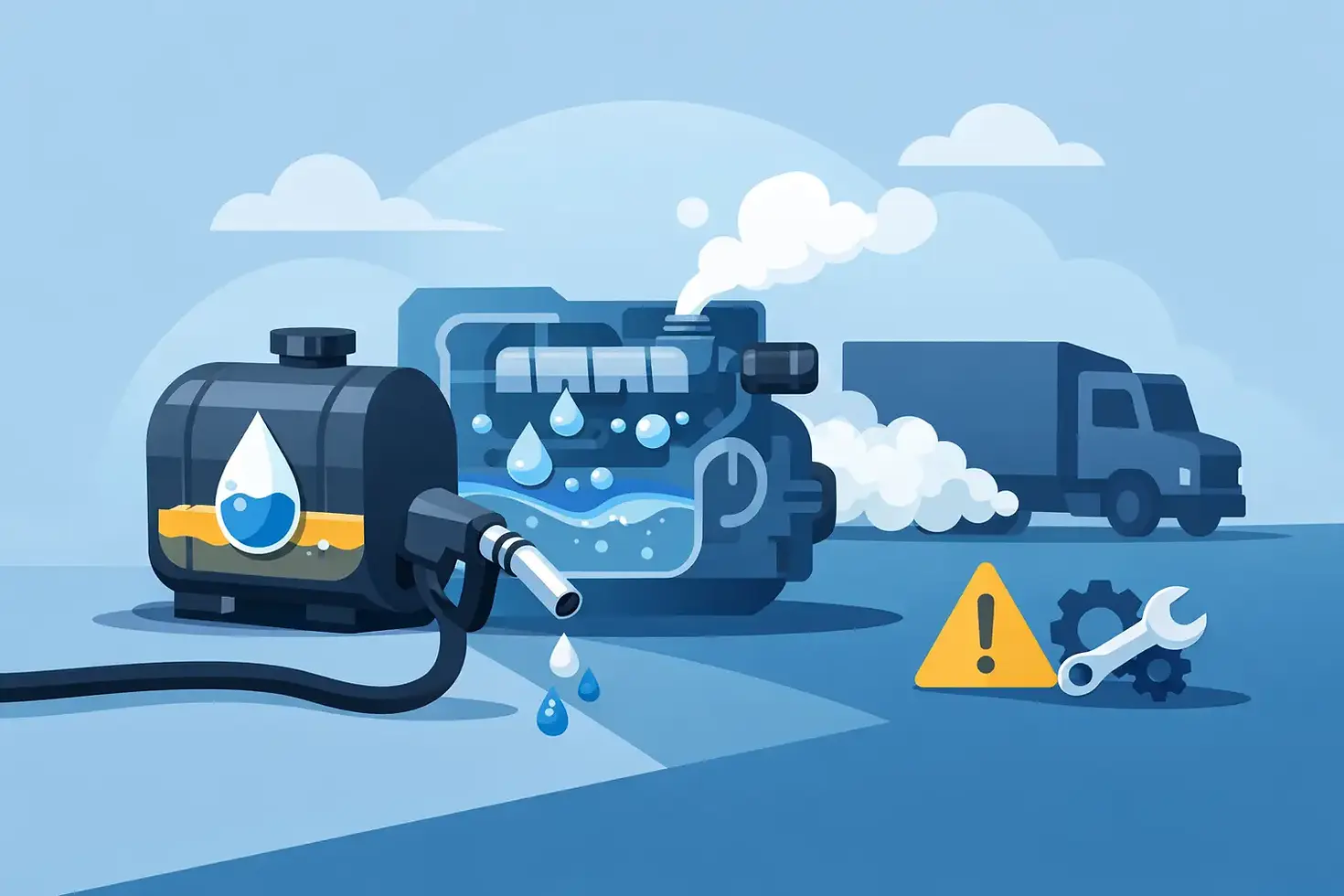
Water in Diesel Tank Symptoms Explained

A diesel engine that suddenly feels rough, hesitant or unusually smoky often has a contamination problem rather than a random fault. Water in diesel tank symptoms can appear after filling up, after a vehicle has been standing, or during cold, damp weather, and the key point is this - the longer you keep driving, the greater the risk of damage and breakdown.
What water in diesel does to your vehicle
Diesel fuel systems rely on clean, lubricating fuel passing through pumps, injectors and filters at high pressure. Water does the exact opposite. It reduces lubrication, encourages corrosion and disrupts combustion, which is why a vehicle can go from running slightly unevenly to not starting at all.
Modern diesel engines are especially vulnerable because tolerances are tight and components are expensive. A small amount of contamination might first show up as poor running, but if water reaches sensitive fuel system parts, repair costs can rise quickly. That is why this is not a problem to ignore and hope it clears itself.
Water in diesel tank symptoms to watch for
The symptoms are not always dramatic at first. In many cases, drivers notice a change in how the vehicle feels before any dashboard warning light appears.
Hard starting or failure to start
One of the most common signs is difficult starting, particularly after the vehicle has been left overnight. If enough water has settled in the tank and reached the fuel pickup, the engine may crank longer than usual, misfire as it catches, or fail to start completely. Water does not burn like diesel, so combustion becomes erratic.
Rough idling and misfiring
If the engine starts but sounds uneven, shakes at idle or feels like it is missing, contaminated fuel is a strong possibility. Water passing through the system interrupts the normal fuel spray pattern and causes inconsistent firing. Some drivers describe it as the vehicle feeling lumpy or unsettled.
Hesitation under acceleration
A diesel vehicle with water contamination may respond poorly when you pull away, join a dual carriageway or climb a hill. Instead of smooth power, you may get a flat spot, jerking or sluggish acceleration. That is often because the engine is not receiving clean, combustible fuel consistently.
Loss of power while driving
This is where the problem becomes more serious. If the engine begins to lose power at speed, enters limp mode or struggles to maintain normal performance, stop using the vehicle as soon as it is safe to do so. Continuing to drive can pull more contaminated fuel through the system and make the clean-out more involved.
Excessive smoke from the exhaust
Water in the fuel can cause incomplete combustion, which may produce unusual exhaust smoke. The exact colour can vary depending on the vehicle and the extent of contamination, so smoke alone is not a perfect diagnosis. Still, if it appears alongside rough running or poor starting, it adds to the picture.
Warning lights or fault messages
Some vehicles will trigger an engine management light, fuel system warning or water-in-fuel warning. Not every diesel has a dedicated alert, so the absence of a warning light does not mean the fuel is fine. Equally, a warning light can point to several faults, which is why symptoms need to be looked at together.
Stalling
If there is a larger amount of water in the tank, the engine may cut out shortly after starting or stall during low-speed driving. This can happen because the fuel supply reaching the engine is too contaminated to sustain combustion. At that stage, restarting it repeatedly is usually the wrong move.
Why these symptoms can be easy to miss
Water in diesel tank symptoms do not always arrive all at once. Sometimes the first sign is just that the engine feels slightly less eager, especially on a cold morning. In other cases, a vehicle may run normally for a short distance and then deteriorate once water from the bottom of the tank is drawn into the system.
That is one reason drivers often confuse the issue with a tired battery, old fuel filter or a general engine fault. The overlap is real. A rough idle or hard start can have several causes. But if the problem appeared after refuelling, after the vehicle stood unused for some time, or after suspected contamination, water in the fuel should be considered early.
How water gets into a diesel tank
There is not just one route. Contamination can happen from poor fuel storage, a compromised filler cap or tank seal, condensation in vehicles that sit unused, or accidental introduction from an external source. Commercial vehicles, agricultural equipment and vans that spend a lot of time parked can be more exposed, but everyday cars are not immune.
It also depends on quantity. A trace amount may be caught by the fuel filter or separator on some vehicles, while a more significant volume can move straight into the fuel system and cause immediate running problems. So the answer is not always as simple as saying every case will lead to the same outcome.
What to do if you suspect water contamination
The safest advice is simple - stop driving the vehicle and do not keep trying to start it. If the engine is still running badly, switch it off when safe. Every extra attempt can draw more contaminated fuel through the pump and injectors.
If you are at a forecourt, parked at home or stranded roadside, the next step is to arrange specialist help. A proper response usually involves draining the tank, removing the contaminated fuel and checking whether the fuel lines and filter also need attention. If the engine has been run, further flushing may be needed depending on how far the contamination has travelled.
This is not a situation where topping up with fresh diesel is a reliable fix. People sometimes hope dilution will solve it, but that depends on how much water is present and whether it has already reached critical components. When expensive diesel systems are involved, guesswork is rarely the cheaper option.
Can you drive with water in diesel?
Technically, a vehicle may still move for a while with a small amount of water in the tank. That does not make it safe to continue. The trade-off is straightforward - you might get a few more miles, but you also increase the chance of injector damage, pump wear, corrosion and a full non-start at the worst possible moment.
For drivers who rely on a car or van daily, that risk is rarely worth taking. A controlled on-site drain is usually far less disruptive than turning a contamination issue into a major repair and recovery job later in the day.
How the problem is usually confirmed
Diagnosis may involve inspecting a fuel sample, checking the filter for signs of water, and assessing the vehicle’s symptoms in context. A technician will also want to know whether the engine was started, how long it ran, and when the issue began. Those details matter because they help determine how far the contamination may have spread.
In some cases, the problem is obvious. In others, it sits alongside similar faults and needs experienced judgement. That is why a specialist contamination response is different from general breakdown attendance. The aim is not just to get the vehicle moving, but to prevent avoidable engine damage.
When urgent help matters most
If your diesel has just been contaminated or has started showing these warning signs, time matters. The best moment to act is before repeated starts, more driving or a complete breakdown complicates the job. Forecourt Rescue Suffolk handles emergency fuel contamination issues on-site, which means the vehicle can often be dealt with where it stands rather than being towed elsewhere first.
If you call for help, be ready with your exact location, registration and a clear description of what happened. If you are off the main road, What3Words can help pinpoint you faster. Calm, accurate information makes dispatch quicker and gets the right equipment to you sooner.
The simplest way to limit damage
The most useful thing you can do is resist the urge to see if it will clear on its own. Water contamination rarely improves with more driving. If your diesel is hard to start, running rough, losing power or stalling after suspected contamination, treat it as a stop-now problem, not a wait-and-see one.
A prompt specialist drain is often the difference between a contained fuel issue and a much larger repair bill. When the signs are there, acting early is usually the cheapest decision you make all day.


