
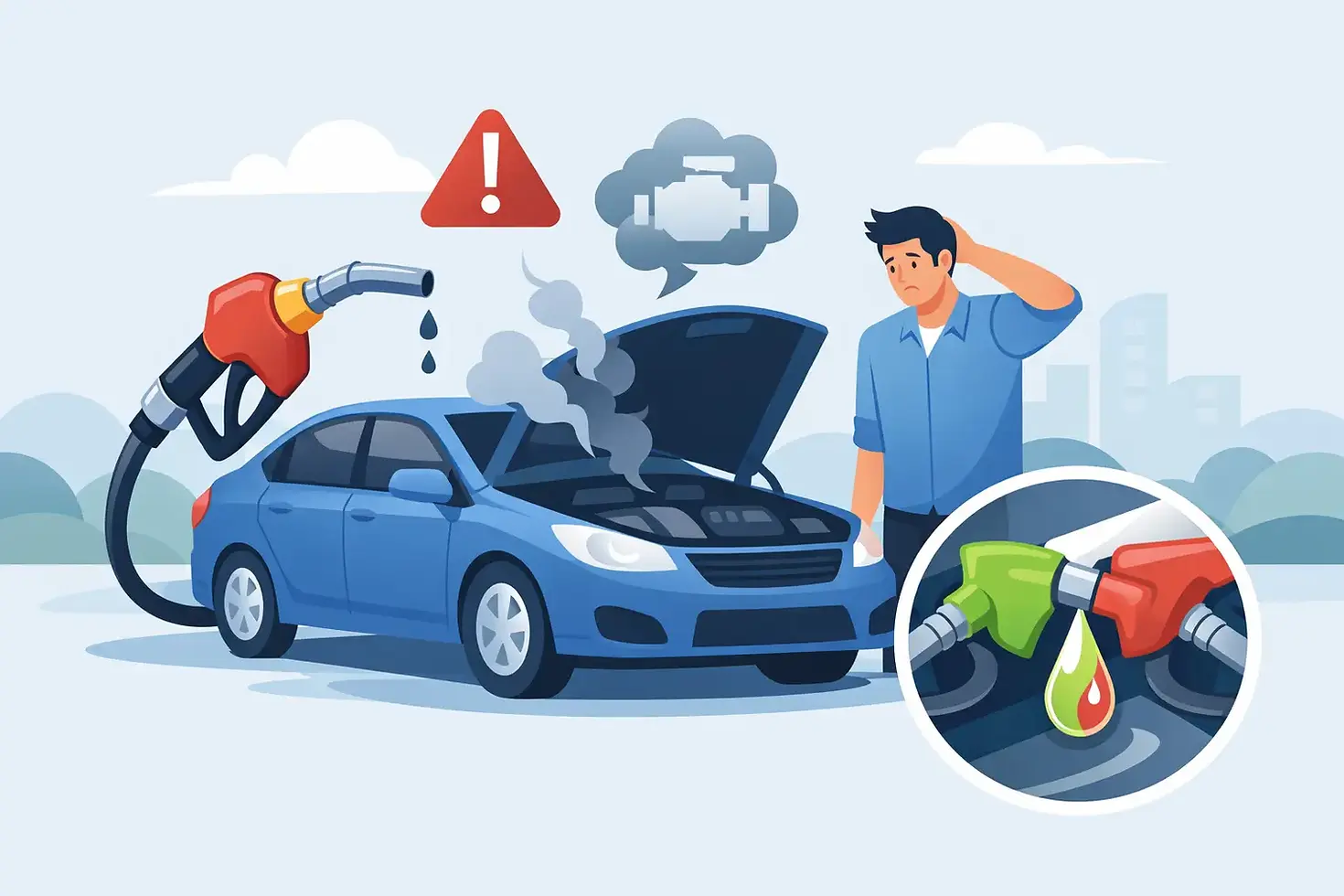
What Happens After Wrong Fuel in Your Car?
- Forecourt Rescue Suffolk
- 3 days ago
- 6 min read

You realise the mistake a second too late. The nozzle is back on the pump, the receipt is printing, and now you are asking the only question that matters - what happens after wrong fuel goes into your car?
The answer depends on two things: what fuel went in, and whether the engine was started or driven. In many cases, the damage is preventable if you stop immediately and get the fuel system dealt with properly. In the worst cases, carrying on can turn a simple drain-down into a much more expensive repair.
What happens after wrong fuel depends on the mistake
Not every misfuel incident plays out the same way. Petrol in a diesel car is usually the higher-risk scenario because diesel fuel systems rely on lubrication, and petrol strips that lubrication away. Modern diesel engines are especially sensitive, with high-pressure pumps and injectors that can be damaged quickly if contaminated fuel is circulated.
Diesel in a petrol car is often less catastrophic, but that does not mean it is safe to ignore. Petrol engines are designed to ignite a very different fuel mixture. Diesel is heavier, less volatile, and can cause misfiring, smoke, rough running and stalling. If enough diesel has gone in, the car may not start at all.
There are also other contamination problems that drivers often group under wrong fuel. AdBlue in the diesel tank is one of the most serious because it is not a fuel at all. It can crystallise inside the system and damage pumps, injectors and tanks. Water in diesel and screenwash in the wrong reservoir can also create mechanical problems that need specialist attention.
If you have not started the engine
This is the best-case version of a bad situation. If the wrong fuel is sitting only in the tank and has not yet been drawn through the fuel lines, pump and injectors, the repair is usually more straightforward.
In practical terms, that normally means the contaminated fuel can be drained from the tank, the system checked, and the vehicle refuelled correctly before restarting. That is why the first instruction is always the same: do not turn the key, do not press the start button, and do not try to "just move it" to a parking space if the engine is not already running.
Even switching the ignition on in some vehicles can activate the fuel pump. That can begin circulating contaminated fuel before the engine fully starts. If you have realised the error on the forecourt, leave the car where it is if it is safe to do so and let the station staff know what has happened.
What happens after wrong fuel if you started or drove
Once the engine has been started, the wrong fuel is no longer only in the tank. It begins moving through the fuel system, and that changes both the risk and the remedy.
With petrol in a diesel vehicle, you may notice the engine becoming noisy, hesitant or difficult to keep running. Some cars will stall. Others may continue for a short distance before the effects become obvious. The danger is that vital diesel components are now being asked to run without proper lubrication.
With diesel in a petrol car, symptoms often include rough idling, poor acceleration, excess exhaust smoke and eventually non-starting. It can feel as though the car is struggling or choking. If you keep driving, unburnt fuel can create further issues in the combustion and exhaust system.
At this stage, a proper drain and flush is usually needed, and sometimes more. It depends on how far the contaminated fuel has travelled, the type of engine, and how long the vehicle was operated after the mistake.
The most common wrong fuel scenarios
Petrol in a diesel car
This is the one most drivers worry about, and for good reason. Diesel acts as both fuel and lubricant inside parts of the system. Petrol does not. In older diesels, a small amount of petrol was sometimes tolerated better than it is in modern engines, but that is not a risk worth taking now.
Common symptoms include knocking, loss of power, warning lights and stalling. If the vehicle has only just been started, fast action can still limit the harm. If it has been driven for miles, the risk of pump and injector damage rises sharply.
Diesel in a petrol car
This usually causes running problems rather than immediate internal wear, but it can still leave you stranded. The engine may misfire, smoke or fail to start once enough diesel reaches it. Spark plugs can foul, and the car may need more than a simple tank drain if it has been driven extensively.
The key point is that "less serious" does not mean harmless. Continuing to drive can make the clean-up bigger and the recovery slower.
This needs urgent specialist attention. AdBlue is a urea-based fluid used in the emissions system, not the fuel system. If it enters the diesel tank, starting the engine can spread contamination quickly. Even a small amount can cause major problems. In many cases, the correct response is immediate drainage before any attempt is made to start or move the vehicle.
What to do immediately after misfuelling
First, stop. If the engine is off, keep it off. If it is already running and you have just realised the mistake, stop as soon as it is safe. The next step is to arrange specialist help rather than trying home remedies or hoping dilution will sort it out.
Adding more of the correct fuel is not a reliable fix. People sometimes think topping up the tank will weaken the contamination enough to get home. That gamble can go badly wrong, especially with modern diesel systems. A repair that might have been limited to on-site drainage can become a much more expensive workshop job.
If you are waiting for assistance, have your location ready. On a forecourt or roadside, clear details speed everything up. A postcode helps, but a precise pin or What3Words location is even better when time matters.
Why fast action matters
Misfuelling is one of those problems where delay can be costly. The longer the wrong fuel stays in the system, and the more the vehicle is used, the greater the chance of secondary damage.
That does not always mean disaster. Plenty of wrong fuel incidents are resolved cleanly when dealt with quickly. A mobile specialist can often attend where the vehicle is, drain the contaminated fuel, flush the system where required, and get you back on the road without towing the car to a garage.
That convenience matters when you are stranded at a filling station, late for work, travelling with children, or trying to keep a van on the road for business use. It is not just about fixing the fuel issue. It is about preventing lost time, extra recovery charges and unnecessary repairs.
Can the car be saved without major damage?
Often, yes. The outcome depends on how quickly you stopped and what type of contamination is involved. If the engine was not started, the chances of avoiding further damage are much better. If it was started but stopped quickly, there is still a good chance of limiting the problem with proper drainage and flushing.
Where things become less predictable is when the vehicle has been driven for some distance, particularly with petrol in a diesel engine or AdBlue in the fuel tank. In those cases, parts may need inspection or replacement after the contaminated fuel is removed.
That is why calm, early action matters more than guesswork. A specialist can assess the situation based on the fuel type, vehicle, and how far the contamination has spread.
What happens next once the fuel is removed
After the wrong fuel is drained, the vehicle is usually refuelled with the correct product and tested carefully. Depending on the incident, the fuel lines may need flushing and the filter may need replacing. The engine can then be restarted and checked for normal running.
If the contamination was caught early, that may be the end of it. If it was not, further diagnostics may be needed to confirm that pumps, injectors or other components have not been affected. The right approach is always based on the actual exposure, not assumptions.
For drivers in Suffolk, this is exactly why a dedicated response service matters. Forecourt Rescue Suffolk attends misfuel incidents on-site, helping motorists avoid the added hassle of arranging separate towing and workshop recovery when quick intervention can prevent the situation from escalating.
The mistake feels awful, but the next move is simple
Wrong fuel happens to careful people in ordinary moments - on an unfamiliar forecourt, in a hire car, during a rushed school run, or at the end of a long day. What matters now is not the mistake itself but what you do next. Keep the engine off, get specialist help, and give the problem the best chance of ending as a short interruption rather than a major repair.


