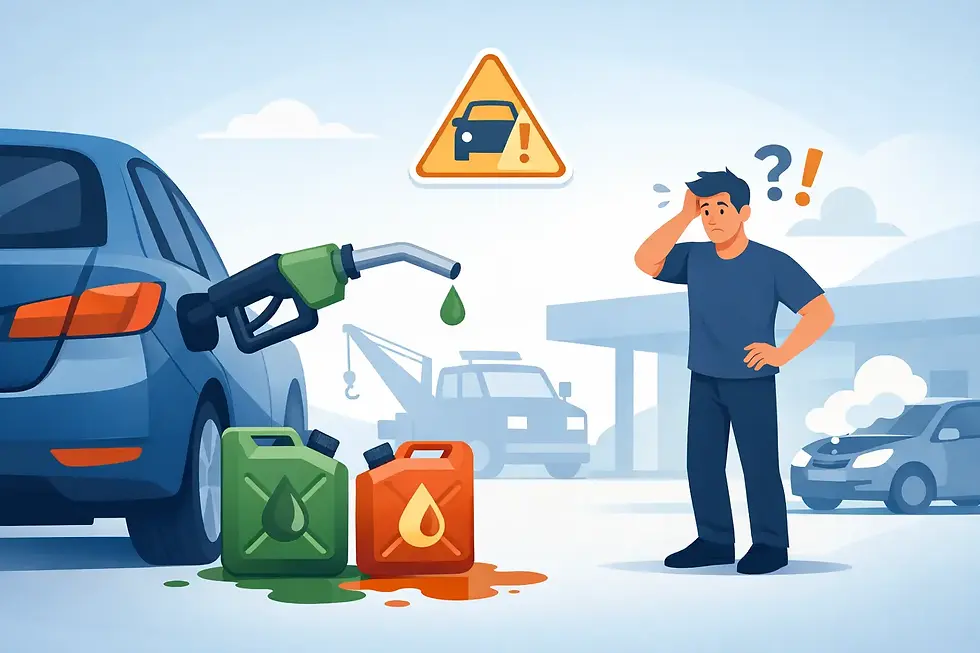
Misfuelled Car Roadside Steps to Take
- Forecourt Rescue Suffolk
- Jun 28
- 6 min read

01473 875186
24/7 Emergency Mobile Wrong Fuel Drain Service in Suffolk
A misfuelled car can go from a simple mistake to a very expensive repair in minutes. The right misfuelled car roadside steps are not complicated, but timing matters. If you have put the wrong fuel in, or added the wrong fluid to the wrong tank, the safest move is to stop, avoid starting the engine, and get specialist help to your location.
Most drivers feel the same thing when it happens - panic, embarrassment, then the urge to try something quickly and hope for the best. That is exactly when more damage tends to happen. A calm response usually saves money, time, and a far bigger repair bill.

Misfuelled car roadside steps that matter first
The first and most important step is simple: do not turn the key. If the engine is already off, leave it off. If you realise the mistake while still on the forecourt, do not start the vehicle to move it. Rolling it by hand into a safer position, if that is permitted and practical, is far better than circulating the wrong fuel through the system.
If you have already started the car, pull over safely as soon as you can. Switch the engine off, put your hazard lights on if needed, and stay somewhere safe away from moving traffic. Continuing to drive, even for a short distance, increases the chance that contaminated fuel reaches injectors, pumps, filters, and other parts that are costly to replace.
Then take stock of what went in. Petrol in a diesel car is the most common scenario, but diesel in a petrol car causes problems too. AdBlue in the diesel tank is particularly serious because it can crystallise and damage the fuel system. Water in diesel or screenwash in an AdBlue tank also need specialist attention rather than guesswork.
Why the first few minutes make such a difference
Wrong fuel does not always cause instant failure, which is why some drivers assume they have got away with it. Sometimes the vehicle may still start, idle, or even drive for a short while. That can create false confidence. The damage risk depends on the fuel type, how much was added, whether the engine was started, and how far the contamination has travelled through the system.
Diesel systems, especially on newer vehicles, are less forgiving than many people expect. Petrol reduces lubrication inside diesel fuel components, and that can lead to wear or failure in the high-pressure pump and injectors. Once metal debris starts circulating, the repair can become far more extensive.
Diesel in a petrol vehicle is often less destructive in the same immediate way, but it can still cause poor running, stalling, smoke, and blocked components. AdBlue contamination is usually more urgent again. It is not a fuel additive, and once it enters the fuel system it can trigger serious damage if the vehicle is run.
What to do at the roadside
Start with safety. If you are on a busy road, a dark lane, or anywhere you feel exposed, move yourself and any passengers to a safe place if possible. If the vehicle is causing a hazard, report that when you call for assistance. On a forecourt, let staff know what has happened so they understand why the vehicle is staying put.
Next, gather the key details. You will usually be asked what vehicle you have, which fuel was added, roughly how much went in, whether the engine has been started, and your exact location. If you are not sure of the amount, an estimate is still useful. If you are on a rural road or lay-by, What3Words can help pinpoint you quickly.
After that, wait for specialist advice and avoid experimenting. Do not top the tank up with the correct fuel in the hope it will dilute the problem enough. That sometimes sounds sensible, but it is not a reliable fix and can make draining and remediation more difficult. Do not keep trying to restart a car that has stalled after misfuelling either.
What not to do after misfuelling
This is where many costly mistakes happen. Drivers often act with good intentions, but the wrong action can turn a straightforward drain into a major repair.
Do not drive to a garage, dealer, or home just because it is nearby. Distance is not the point. Once the wrong fuel is moving through the system, damage risk rises.
Do not rely on old advice from forums or friends that says a small amount will be fine in every case. Older cars and newer cars behave differently, and common rail diesel engines in particular can be very sensitive.
Do not attempt a roadside drain yourself unless you are properly trained and equipped. Modern fuel systems are not set up for improvised fixes with hoses, cans, or basic hand tools on the verge. There are environmental, safety, and contamination risks as well.
When it might seem minor, but still needs attention
Some cases are less severe than others, and that is where confusion often creeps in. If only a very small amount of diesel has gone into a petrol car and the tank was already mostly full, the outcome may be less dramatic. Equally, if a tiny amount of petrol has gone into an older diesel, the response can differ from a newer diesel van with a more sensitive injection system.
But roadside decisions should not be based on hope. The issue is not just whether the vehicle can run. It is whether running it is worth the risk. A quick professional assessment is usually the safer and cheaper route than gambling on what might be a harmless amount.
How a specialist roadside service usually resolves it
In most straightforward misfuelling incidents, the vehicle can be dealt with where it stands. A technician confirms the contamination type, drains the affected tank using specialist equipment, removes the wrong fuel safely, and flushes the system where needed. The vehicle can then be refuelled correctly and checked before being restarted.
That is the key advantage of a mobile response. You do not have to organise towing, wait for a workshop slot, or risk further damage by moving the vehicle. For many drivers, especially families, commuters, and business users, on-site resolution means getting back on the road far sooner and with much less disruption.
Where the engine has already been run for some distance, the job can become more involved. Extra flushing, filter replacement, fault checks, or further workshop investigation may be needed. It depends on the type of contamination and how long the vehicle has been driven. Even then, stopping early gives you the best chance of avoiding the worst-case bill.
If you are stranded in Suffolk
If this happens locally, a specialist mobile service such as Forecourt Rescue Suffolk can usually come directly to a forecourt, roadside location, workplace, or home address. That local response matters when you are stressed and trying to explain where you are. The faster the right team reaches you, the sooner the risk of unnecessary damage is brought under control.
Why speed matters, but calm matters more
Drivers often think the main goal is to get moving again as quickly as possible. In reality, the first goal is to stop the situation getting worse. A rushed decision to start the engine, drive a short distance, or try a DIY fix often adds delay rather than removing it.
The better approach is calm and methodical. Make the vehicle safe, keep the engine off, confirm what happened, share your location clearly, and let a specialist take over. That protects the car and takes pressure off you at the same time.
A few practical details to keep ready
If you are waiting at the roadside, keep your phone charged if possible and stay available for updates. Have your registration handy, and be ready to describe nearby landmarks if your signal is poor or your location is awkward to find. If you are with children or vulnerable passengers, mention that when you call so the urgency is fully understood.
It also helps to keep hold of the fuel receipt if you have one. It can confirm what was dispensed and roughly how much entered the tank. That may assist the technician in deciding the safest next step.
Misfuelling feels dramatic in the moment, but it is one of those problems that usually has a clear solution when handled properly. The biggest difference comes from what you do in the first few minutes. Keep the engine off, resist the temptation to improvise, and get the right help to you - that single decision can be the one that saves your fuel system from a much bigger problem.